
- Messages
- 6,450
19,357 milliseconds = ~19 seconds.Would like to know what this is: Search: 19357ms (because that is 322.61667 minutes????)
That's 30 minutes to generate the complete response. You're very patient.Generation: 807 tokens in 1820696ms

19,357 milliseconds = ~19 seconds.Would like to know what this is: Search: 19357ms (because that is 322.61667 minutes????)
That's 30 minutes to generate the complete response. You're very patient.Generation: 807 tokens in 1820696ms

 Ha! After upgrade can’t wait for comparison.
Oops i missed that M in ms,19,357 milliseconds = ~19 seconds.
That's 30 minutes to generate the complete response. You're very patient.


 thanks for being the guy that show us these things...
Please give us the "exact search" phrase, so we can enjoy with you.Here's a search I just did:
Here is a teaching/preaching outline based on the work and ministry of the Holy Spirit, primarily drawing from John Chapters 14-16, and citing the relevant passages and sources.
The Promise and Ministry of the Holy Spirit
Central Theme: Jesus promises to send the Holy Spirit (the Comforter) to dwell with believers, who will then continue Christ's work, revealing the Father, and bringing all things to remembrance.
I. The Necessity of Christ's Departure (The Transition)
Before the Spirit can fully apply His work, Christ must depart to the Father.
- The Going Away: Jesus states, "I go away, and come again unto you" [John 14:3].
- The Greater Reality: Jesus goes to the Father, who is greater than Him [John 15:2].
- The Promise of Return: Jesus promises, "I will come again, and receive you unto myself; that where I am, there ye may be also" [John 14:3].
II. The Promise of the Comforter (The Spirit's Arrival)
Upon Christ's departure, the Spirit will be sent. This Comforter is the Holy Spirit.
- The Promise of the Advocate: Jesus promises, "I will pray the Father, and he shall give you another Comforter, that he may abide with you for ever" [John 16:16-17].
- The Spirit of Truth: This Comforter is identified as the "Spirit of truth" [John 16:17].
- The Spirit's Indwelling: He will abide with believers, moving from an external presence to an internal one [John 14:17].
III. The Ministry of the Holy Spirit (What He Does)
Once present, the Spirit performs several vital functions:
A. Teaching and Guidance (Illumination)
B. Bringing to Remembrance (Memory)
- Guiding into All Truth: The Spirit will guide believers into complete truth [John 16:13].
- This guidance is a loving hand leading the believer into spiritual and moral truth [John 16:13, 31].
- He will reveal the Father and the Son through the Son [John 16:15].
- Revealing the Father: The Spirit's work is to reveal the Father [John 16:15].
C. Convicting the World (Judgment)
- Recalling Christ's Words: The Spirit will bring all things to remembrance, concerning what Jesus said [John 16:7-8].
- This includes bringing back the lessons and sayings of Jesus that the disciples had heard but might have forgotten [John 16:7-8, 36].
- He enables the apostles to testify to the words of the Lord [John 16:7-8].
- Conviction of Sin: The Spirit reproves the world concerning sin [John 16:8].
- This conviction occurs because people do not believe in Jesus [John 16:8].
- The Spirit's work is to convict concerning sin, righteousness, and judgment [John 16:8].
IV. The Believer's Response (How We Respond)
The believer must actively participate in the Spirit's work.
A. Abiding in Christ (The Vine)
B. Asking in Christ's Name (Prayer)
- Abiding is Essential: Believers must abide in Christ, just as a branch cannot bear fruit without the vine [John 15:4, 5].
- Bearing Fruit: The believer must bear fruit, which is the evidence of discipleship [John 15:8].
- Love and Obedience: Love is demonstrated by keeping Christ's commandments [John 14:15].
- Asking in His Name: When we ask anything in Christ's name, the Father will glorify Himself in the Son [John 14:13].
- The Condition of Love: If we love Christ, we will keep His commandments [John 14:15].
- The Result of Asking: If we ask according to His name, we will receive [John 16:23-24].
V. The Ultimate State (The Fullness of Joy)
The goal of this divine interaction is a complete and overflowing joy.
— SwordSearcher Librarian · google_gemma-4-E4B-it-Q3_K_M.gguf · 32K ctx · Balanced · 46 chunks · 6/29/2026 7:39:21 PM
- The Peace Given: Jesus leaves a peace that the world cannot give [John 14:27].
- The Fullness of Joy: We are promised that we shall ask, and we shall receive, so that our joy may be full [John 16:27].
- The Knowing: Through this process, we come to know the Father and the Son [John 14:7, 9].

I did use the copy button, and pasted exactly what was there. I had asked it to create a teaching / preaching outline.It would be helpful to know what you asked for, exactly. There is a copy button on your query you can use to copy the text.
"Give me a teaching/preaching outline based on the work and ministry of the Holy Spirit, primarily drawing from John Chapters 14-16, and citing the relevant passages and sources." That was my query.Please give us the "exact search" phrase, so we can enjoy with you.

I just ran this search:I did use the copy button, and pasted exactly what was there. I had asked it to create a teaching / preaching outline.
I do like that fact that I can expand the sources and have everything right there. That really seems like what you want a Librarian assistant to do for you, in terms of collecting up all the sources.
One thing I am puzzled by, I don't seem to be able to get actual verses quoted in the answers themselves. The sources cited usually take me to material that makes the verses used clear, or showing the sources. But I have tried several queries and can't seem to get the actual verse reference to be included in the most of the answers. I don't really see a setting for that. Not sure how others are getting that and I am not. Is there a way to ask for that response? I have literally told it to cite the actual verses in the response, but that didn't work. Thanks.
Thanks!"Give me a teaching/preaching outline based on the work and ministry of the Holy Spirit, primarily drawing from John Chapters 14-16, and citing the relevant passages and sources." That was my query.
I tried a regular search in SwordSearcher before I turned to the Librarian, and I learned that "by whose stripes" is actually only in 1Pe 2:24. Isa 53:5 says "with" his stripes we are healed. I'm learning so much that I didn't know before!I tried that search too ~ "What does the Bible say about the healing stripes of Jesus. Cite actual verses." ~ and got, and I highlighted the interesting part at the bottom.
The Bible teaches that believers are healed by Jesus Christ through the "stripes" or marks of His suffering, which is understood as His atonement. This healing is a complete and sufficient work accomplished by Christ.
The concept is drawn from the healing power inherent in His suffering. The sources discuss this in relation to the physical and spiritual sufferings He endured.
The sources do not contain specific Bible verses that explicitly state, "By whose stripes ye were healed," but rather they interpret the context of the passage, which is Isaiah 53:5.
- The nature of the healing:
- The healing is directly linked to Christ's sufferings. For example, the text states, "By whose stripes ye were healed" [Benson].
- This healing is described as a "weal" or "rising left by a stripe," which can refer to the mark of a lash, as slaves understood it [Pulpit].
- The healing is complete and final: "With his stripes we are healed," [chsSermons].
- This healing is not dependent on human efforts or religious rituals, but solely on Christ's stripes: "not by priestcraft, not by sacraments, not by our own prayers, not by our own good works. 'With his stripes we are healed,' — healed of all sin of every kind, of sins past, of sins present, and sins to come; we are healed, completely healed, even now." [chsSermons].
- The extent of the healing:
- The healing is comprehensive, covering all sins: "He suffered the smiters to draw long furrows on His back, Ps 129:3, to wound His head and face, His hands and feet, and to pierce His heart that in our stead, as the Head for the members, He might make atonement." [UTB].
- The stripes are the means by which we are healed: "It is by these that we are healed." [PHC].
- The healing is a substitutionary act, where Christ took our place: "He stood in our place that we might stand in his place." [chsSermons].
- The healing is a complete discharge from legal liability: "Accepting Christ Jesus as suffering for me, I have accepted a complete discharge from judicial liability." [chsSermons].
Note: The sources provided are commentaries and expositions on the concept, and do not contain the original Bible verses themselves, only references to them [e.g., Isaiah 53:5]. Therefore, the answer is based on the theological exposition of the passage, not a direct quotation of the verse itself.
— SwordSearcher Librarian · google_gemma-4-E4B-it-Q3_K_M.gguf · 32K ctx · Balanced · 46 chunks · 7/2/2026 11:43:14 AM
Thanks brother..."Give me a teaching/preaching outline based on the work and ministry of the Holy Spirit, primarily drawing from John Chapters 14-16, and citing the relevant passages and sources." That was my query.
You certainly have some interesting searches Brother! Thanks.I also tried: "Provide a teaching outline for John 15:1-8 and cite scripture cross references for every verse." Response includes [KJV] frequently but most take me back to John 15:1, not other verses. I find this interesting. I am not sure I could simply go with any outline from the Librarian but I do think it can provide valuable assistance in helping organize ideas:
Here is a teaching outline for John 15:1-8, based on the provided commentaries and notes.
The central theme of John 15:1-8 is the vital, life-giving union between Christ (the True Vine) and His followers (the branches), emphasizing that all spiritual life, strength, and fruitfulness originate from Him.
I. The Identity of the Vine and Husbandman [John 15:1]
- Jesus is the True Vine:
- He is the genuine, real, and ideal Vine, in contrast to the temporary or failing vine that represented the Jewish nation or the Old Covenant system [Darby] [FWGrant] [Gaebelein].
- He is the source of all true life and nourishment [PHC].
- He is the fulfillment of the promises made regarding the vine, which was often applied to Israel in the Old Testament [e.g., Isaiah 5:1-7; Jeremiah 2:21; Ezekiel 15:2] [Ellicott] [FBHCNT] [PNTC].
- He is the "branch made strong for thyself" [FBHCNT].
- He is the "most excellent branch of the Vine" [Darby].
- The concept of the vine is a familiar figure in Jewish thought, but Christ presents Himself as the ultimate, true Vine [Gill].
- The Father is the Husbandman (Vine-dresser):
- The Father is the one who planted the vine and cares for it [FBHCNT] [PHC].
- He is the Owner and Proprietor of the vineyard [FBN] [Sutcliffe].
- He nurtures, trims, and defends the vine [FBHCNT].
- This care is exercised through providence [Coke].
II. The Nature of the Union and Its Requirements [John 15:1-2]
- The Necessity of Connection:
- All life, strength, and fruitfulness for the branches must come from the main stalk/Vine [RyleETG].
- The branch cannot bear fruit of its own; it must abide in the Vine [KJV] [PHC].
- The union is a living, vital connection [Gaebelein].
- The Work of the Husbandman (Pruning and Cleansing):
- The Husbandman's work involves two aspects:
- Cleansing/Purging: He cleanses the branches that are fruitful so they may bring forth more fruit [KJV] [Sutcliffe]. This cleansing is done by the Father's Word, Spirit, ordinances, mercies, and afflictions [Burkitt] [Coke].
- Removal/Judgment: He takes away every branch that bears no fruit [KJV] [PHC]. This refers to those who profess to be branches but are unfruitful [Gaebelein].
III. The Command and Promise of Abiding [John 15:3-8]
- The Command to Be Clean:
- "Now ye are clean through the word which I have spoken unto you" [KJV] [PHC]. This cleansing power is exercised through the Word [Gaebelein].
- The cleansing is a prerequisite for the life that flows from the Vine [RyleETG].
- The Command to Abide:
- "Abide in me, and I in you" [KJV] [PHC]. This indwelling is mutual [PHC].
- The branch cannot produce fruit unless it remains connected to the Vine [KJV] [RyleETG].
- The Promise of Fruitfulness:
- The one who remains in the Vine and allows the Vine to remain in him will bring forth much fruit [KJV] [RyleETG].
- This fruitfulness is the way the Father is glorified [KJV] [PHC].
- The ultimate goal is that the disciples bear much fruit, thereby proving their discipleship [KJV] [PHC].
- The Assurance of Prayerful Access (The Promise):
- If one abides in the Vine and the Vine's words abide in the one, they will have access to ask for what they desire, and it will be done [KJV].
Note on the Nature of the Union: Commentaries suggest that the imagery of the vine is a fulfillment of the Old Testament prophetic types regarding Israel, but Christ presents Himself as the true and ideal Vine, which is the source of life, contrasting with the Old Covenant system [Darby] [FWGrant] [Lightfoot]. The life-giving union is the central reality of the passage [RyleETG].
— SwordSearcher Librarian · google_gemma-4-E4B-it-Q3_K_M.gguf · 32K ctx · Balanced · 40 chunks · 7/2/2026 11:55:02 AM
Ended up not really using it for this sermon. I am still figuring out how to get the best benefit with the way I actually have prepared lessons and sermons for 35 years.You certainly have some interesting searches Brother! Thanks.
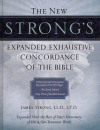 We do have it in SwordSearcher - [KJVSL] King James Version with Strong's Links I wonder if would be useful as stand alone "book module"?
  suppose to be a funny)